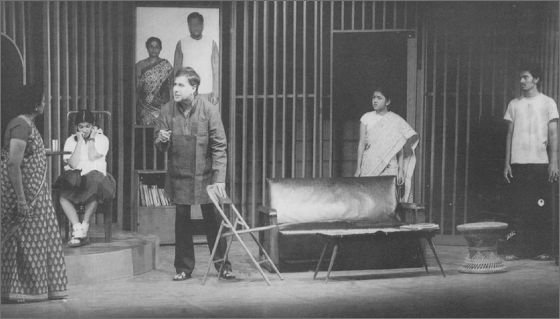
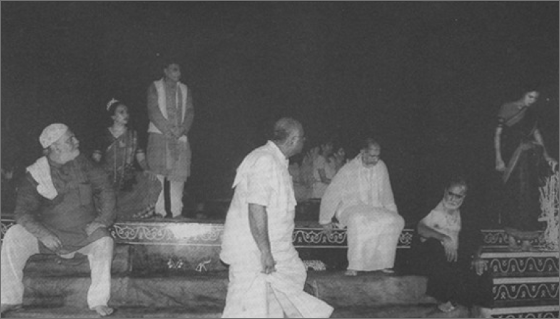
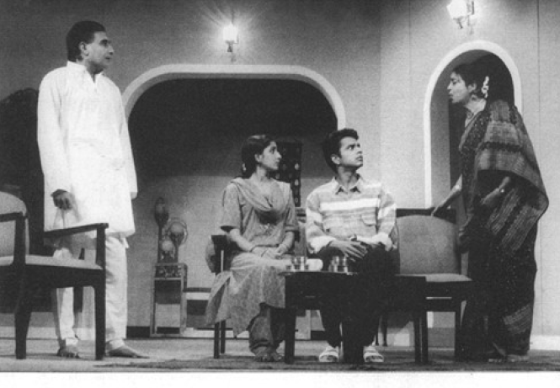
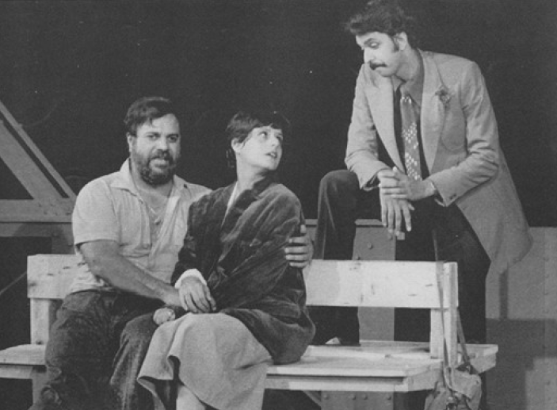
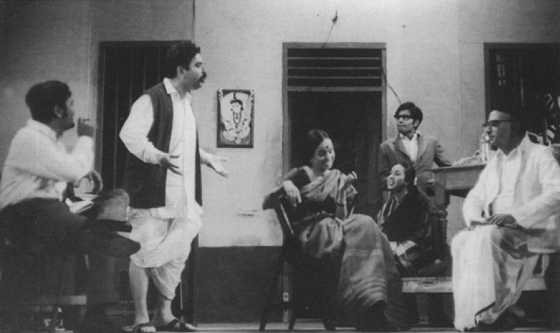
Founded in 1955, The Madras Players is the oldest English theatre group in India. For over seven decades, we have sustained an unbroken and vibrant presence in the country’s modern theatre movement, with more than 300 productions to our credit.
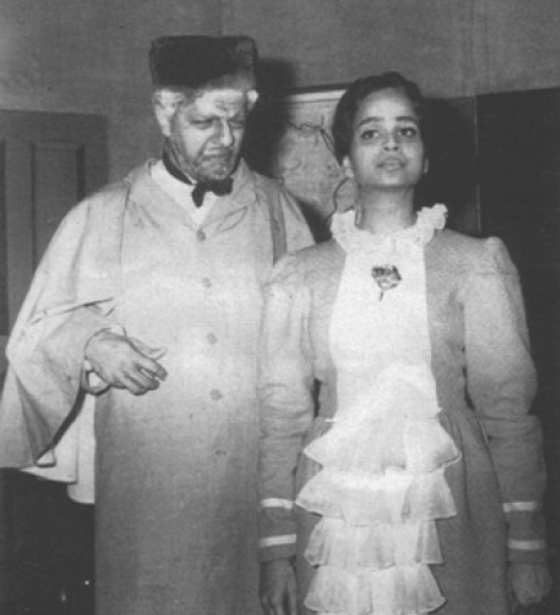
Our journey began as a play reading group that met at the British Library in Madras (now Chennai) and we evolved into a theatre group after the airing of a reading on All India Radio (AIR). On the invitation of Handel Manuel, the programme director at AIR, the group performed Saint Joan by George Bernard Shaw. Following its success, the Head of the British Council, Stanley Best, suggested that the group register as a theatre group, which was named The Madras Players.
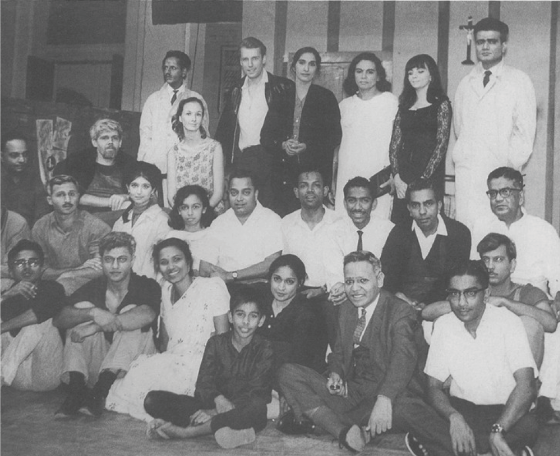
Our founding members included Stanley Best, John Shepherd, Grace Adiappa, Thambi Kadambavanam, Snehalatha Reddy and Yamuna Somasundaram.
From the outset, we embraced ambitious artistic goals. Our first two major productions, staged at the Museum Theatre, were Shakespeare’s Othello and Twelfth Night directed by Robert Newton, from the UK, commissioned by the British Council. Twelfth Night also travelled to Sri Lanka. Then, Douglas Algar, a local businessman with some theatre experience was invited to direct Henrik Ibsen’s Peer Gynt. Staging these three large productions was a bold step for a young group, but there was a sound strategy to it. It established The Madras Players by attracting many aspiring young people who were excluded by the “only Britishness” of the well-entrenched Madras Dramatic Society, which had entertained the Madras public since the early 1900s. The large productions gave opportunities to actors as well as stage crew and professionals like sound and light technicians and designers of costumes and sets.
During those times, the British Council brought out many theatre companies from Britain, giving The Madras Players the opportunity, as the local collaborator, to apprentice the many theatre activities and learn the craft first-hand. Very soon the United States Information Center, Alliance Française, Max Mueller Bhavan (later the Goethe-Institut) and the Russian Cultural Centre also brought out their theatre companies, who staged notable performances in Madras, giving The Madras Players more learning opportunities.
One could say that, in South India, The Madras Players served as a bridge between the theatre of colonial times and the theatre of post-Independence India, when Indian playwrights emerged in the cities of Madras, Calcutta, Bombay and Delhi, offering their new-age works that transformed the Indian theatre scene radically. As Indian playwrights such as Badal Sircar, Vijay Tendulkar, Mohan Rakesh, and Girish Karnad reshaped the national theatre landscape, we performed their plays translated into English.
Between 1963 and 1970, Girish Karnad worked in Madras and was an active member of our group as an actor, director and translator. To quote him – “In those seven years (with The Madras Players) I was involved with some twenty plays – by Pinter, Williams, Shaw, Beckett – and I learnt how language needs to be used on stage: the rhythm, the pacing, the allowances for breath and movement, the pause, the pitching. We also staged some translations of Sartre, Pirandello, Chekhov and so on, and quite diligently compared different versions before deciding on any one. This was excellent training and I asked myself why I couldn’t translate my own plays.”
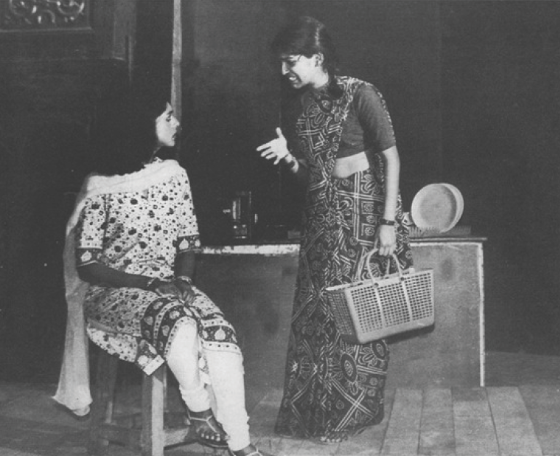
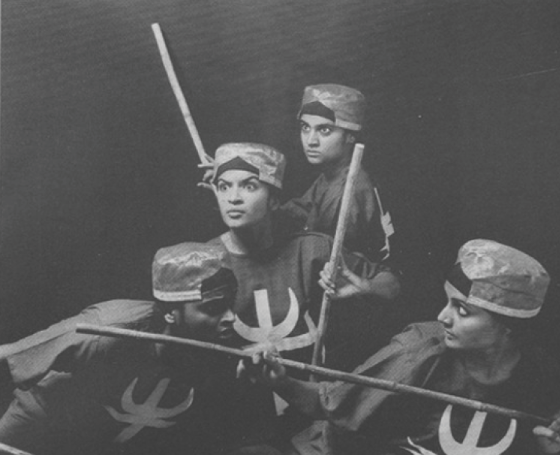
In 2000, we celebrated the Year of the Chennai Playwright, presenting works by local writers and dramatised readings developed through a theatre workshop directed by Mahesh Dattani in collaboration with the British Council. Since our golden jubilee in 2005, we have placed strong emphasis on Indian writing in English and English translations of Indian-language texts. We have presented original stage adaptations of contemporary English novels, bestsellers and short stories by Indian authors. We have also presented works by authors from the Indian subcontinent. Today, we are an eclectic group, offering various genres and styles, working on texts from India and abroad.
Over the years, we have initiated different theatre activities like Supper Theatre, Lunchtime Theatre, Fringe Theatre, and outreach programmes for schools and colleges. We conduct workshops and mentorship programmes to nurture writers, directors and young theatre practitioners.
Our journey over the decades has been enjoyable but not always easy. Theatre is an expensive activity. We strive for maximum professionalism in our work, but we are strictly an amateur group, giving freely of our time and resources. With rising costs, this has become difficult and we now depend increasingly on commercial and corporate sponsorship.
Having turned 70 in 2025, we reflect with pride on our history and renew our commitment to the future. We acknowledge with gratitude the support we have always received from the British Council, Goethe-Institut, American Center and Alliance Française. And we thank our loyal audiences – without you, we would not have been able to travel so far.